

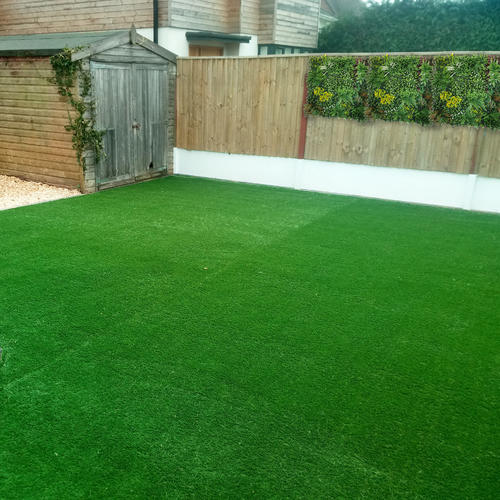
Artificial grass is a popular garden feature, and one that can be easily incorporated into your garden, no matter how big or small. Artificial grass could be a small part of your garden, or it could be the main focal point.
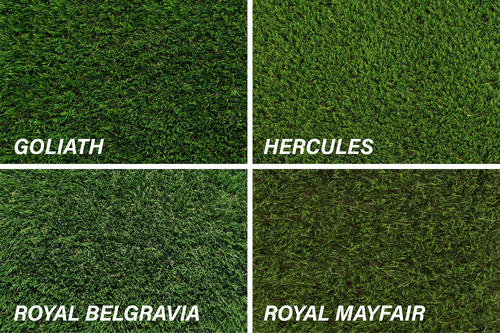
We have four own-brand ranges of artificial turf, which are all high quality yet affordable: Goliath, Hercules, Royal Belgravia and Royal Mayfair.
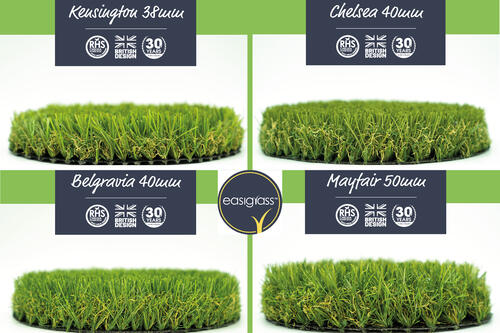
We also have a range of premium artificial grass which has featured in the RHS Chelsea Flower Show: EasiGrass. This is a range of high-end, luxury fake turf consisting of Easigrass Kensington, Easigrass Chelsea, Easigrass Mayfair and Easigrass Belgravia.
If you are looking to install artificial grass in your garden, read this easy-to-follow guide for the best tips! As a rule of thumb, if you do not feel experienced enough in DIY or landscaping, we would recommend hiring a professional landscaper to carry out the job. We can even recommend trusted local landscapers in your area; just give us a call.
Step 1
What to consider before laying artificial grass
Does the area of your garden that you are looking to cover have adequate drainage? This is an important one to consider. If you currently have grass turf which gets a lot of standing water in the rain, artificial grass might not be the best choice.
Consider what you already have within this area. If you have a garden patio with worn paving slabs, best practice is to remove these before installation and lay a proper sub-base for adequate drainage. This can be a very laborious task, so you may want to get some strong helpers. Equally, if you have natural turf grass there already, you will want to dig this up.
Step 2
Measure your area and purchase your grass and sub-base
To work out the square metreage of your artificial grass, measure the longest length by the longest width of the desired area. We always recommend adding an extra 10% for any off-cuts you might need and to allow for any errors. Most of our fake grass can be purchased in 2m, 4m or 5m widths.
For your sub-base, you will need a 75mm depth of Type 1 limestone or scalpings for the same sized area. You will also need 30mm of sharp sand for the same area.
When it comes to purchasing these items, you can order online, over the phone or in-store. We have purpose-built hiab lorries which can reach over fences to deliver large items like artificial grass and bulk bags of aggregates straight into your front or back garden.
Step 3
Prepare your area and lay your base
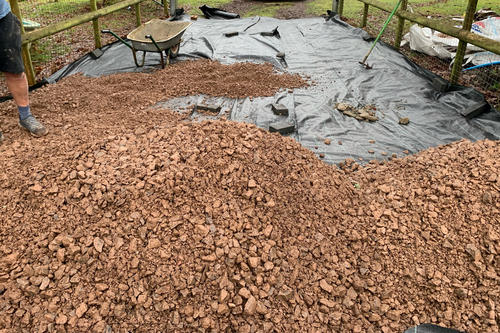
You will need to spend some time digging up whatever you currently have there. If you have turf grass currently laid, dig this up, along with the topsoil, to a depth of approximately 100mm. If you currently have a solid concrete base and your garden drains well, you may lay your artificial grass straight onto this.
Once you have dug the area up, you might want to lay some weed fabric across your soil to prevent weeds coming through your grass. Then lay your Type 1 limestone or scalpings. Compact this as much as you can with either a roller or a vibrating plate. Once compacted, add a layer of sharp sand to a depth of 30mm and compact as required, ensuring there are no gaps and the sub-base is solid enough to walk on.
Step 4
Start laying your artificial grass
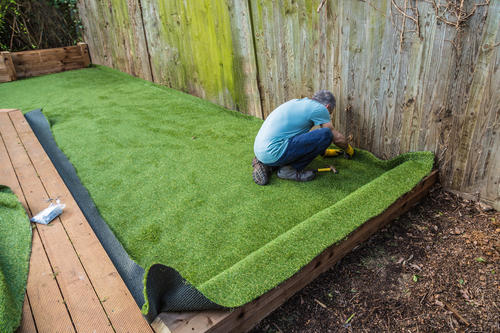
Assuming your sub-base is aggregate based, roll out your artificial grass onto your compacted base. Take the time to work out the direction in which your grass strands are going; it looks much better when the grass is facing your direction and you can see into the pile.
Using a sharp knife, carefully cut the grass on the underside, running your knife neatly next to the stitch lines to avoid cutting into the stitches. Secure the grass with landscaping pins (there are small holes throughout the turf to allow for this).
For particularly large areas where two pieces of artificial grass need joining together, we would recommend getting a landscaper to complete this part.
Step 5
Sweep away excess grass and fluff up
There will be lots of loose grass strands that you can easily sweep away, or to make this job quicker, you could use a leaf blower. There are many different pieces of landscaping equipment available to fluff up the grass and make it stand up, but a leaf blower works equally well. You should see it stand up more over time too.
Artificial Grass Aftercare
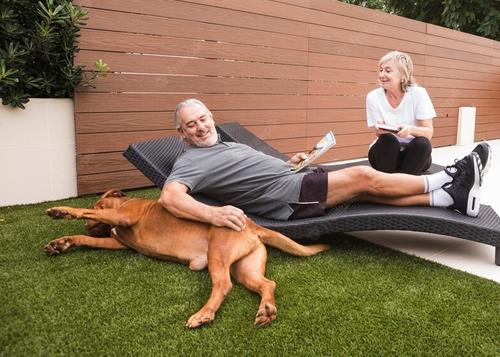
Try to sweep your newly laid grass once a week with a stiff sweeping brush or broom to ensure the fibres are being trained to stand up nicely, so it looks as natural as it can. Artificial grass is perfect if you have dogs or children; however, we recommend picking up any animal mess as and when you can to avoid staining and odours. You can even jet wash the grass to remove any stains or stubborn natural occurrences such as bird droppings.
