

Sandstone and porcelain are two of the most popular paving materials for both homes and commercial spaces. There is plenty to weigh up when deciding between them, and it can get confusing. To make your decision a little simpler, we have put together a comparison of sandstone and porcelain so you can look at the pros and cons of each and make an informed choice.
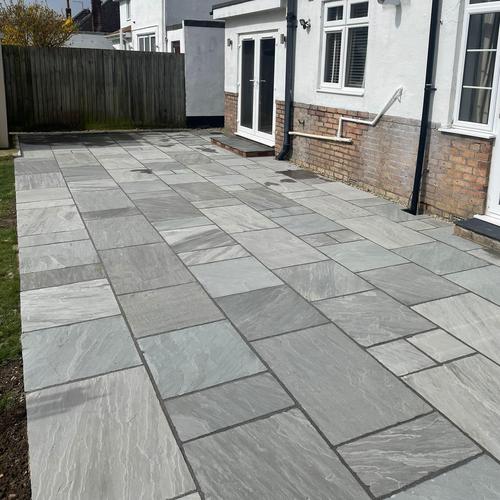
Sandstone Paving Advantages
Durable
Sandstone paving is widely known for being long-lasting and hardwearing. Slabs may show signs of ageing over time, such as gentle discolouration, but that does not mean they damage or break easily. Once laid, you will not need to worry about your paving for many years.
Withstands harsh weather
You need not worry about the climate where you live when it comes to Indian sandstone paving, as it remains sturdy and undamaged whatever the weather throws at it. Whether your property is in a rainy spot or somewhere more humid, your garden paving will cope admirably.
Authentic and organic
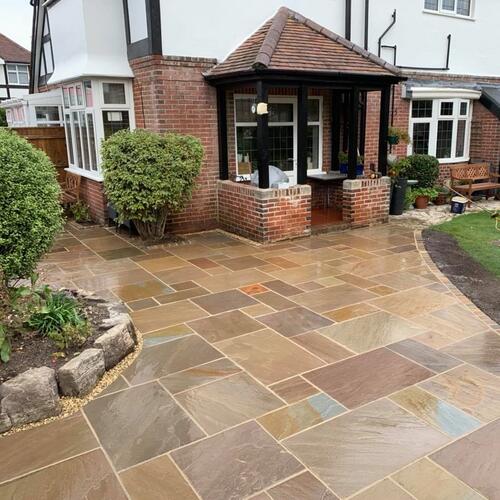
One of the biggest selling points of natural paving is exactly that: it is naturally formed and imported to us from Indian stone quarries. Because each slab is quarried rather than manufactured, every piece is unique and you will not find another exactly like it anywhere else. If you want a garden or patio with a slightly rustic, classic character, sandstone is the perfect choice.
Unique from slab to slab
As each sandstone slab differs from the next, there will be slight variations in colour across your patio. If you want a perfectly consistent colour throughout, that is not always possible without cherry-picking each piece, but for most people these natural differences are exactly what make Indian sandstone so desirable.
Variety: sawn or riven
There are different finishes available when buying sandstone or limestone patio slabs. Sawn edges are machine-cut for a clean, straight edge that creates a streamlined look in your garden. Riven edges, on the other hand, are left a little textured and not perfectly straight, which is ideal for a more rustic, authentic look. If you go the natural route, our sandstone patio pack laying guide shows the correct laying pattern for the mixed-size packs.
Affordable
Although not in every case, natural Indian paving generally tends to be one of the most cost-effective options compared with other paving materials. Even if you have a large area to pave, you will not have to break the bank, and for a smaller garden or courtyard, natural stone is often the most economical route of all.
Eco-friendly
Because Indian sandstone slabs are a natural product, less energy and fuel go into producing them than manufactured alternatives. For homeowners conscious of their carbon footprint, sandstone is a sound choice.
At Stone Zone, we work directly with our suppliers to offer competitive prices on Indian sandstone favourites such as Umbra Kandla Grey, Buff Blend Rippon, Fernlea Raj Green, Autumn Brown and Heather Modak, along with many more. For the full range breakdown and buying FAQs, see our sandstone paving guide.
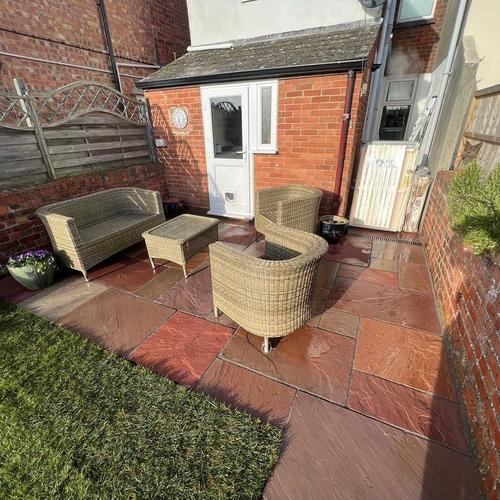
Sandstone Paving Disadvantages
Requires sealing
To prevent algae or moss taking hold, sandstone paving benefits from regular sealing. This ongoing maintenance can be off-putting for those without the time or inclination to keep on top of it, and unsealed paving does run the risk of algae and moss affecting the look of your garden or driveway.
Colour variation
For those seeking a unique look, the naturally varied colouring of stone slabs is a desirable quality. If you would prefer complete control over colour and design for a more uniform finish, a manufactured product may suit you better.
Permeable
Sandstone is a permeable material, meaning it absorbs water. This can actually help with drainage during heavy rain, but it also means that spills can soak in and leave permanent stains. It is worth bearing this in mind when deciding where to lay it; areas next to a swimming pool or an outdoor kitchen may not be the best fit.
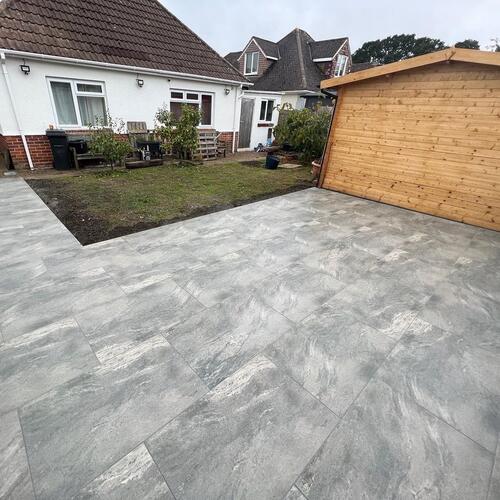
Porcelain Paving Advantages
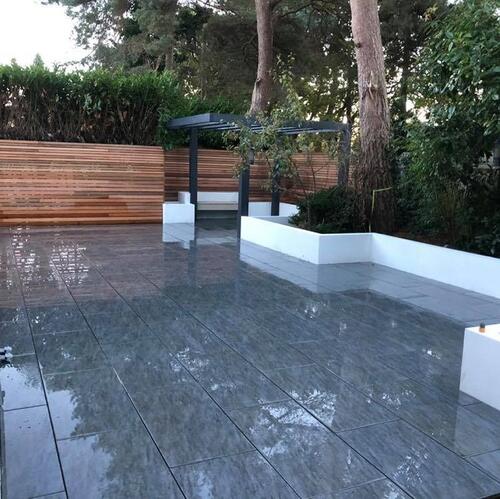
Non-porous and resistant to moisture
At the opposite end of the spectrum, porcelain paving is non-permeable, so it does not absorb any moisture that lands on it. Any spills sit on the surface, making the slabs easy to simply wipe clean.
Hardwearing
Porcelain patio slabs are extremely durable and long-lasting once laid properly, making them an excellent long-term investment that will stay vibrant and unchanged for the foreseeable future.
Consistent design
As porcelain is a manufactured product, the designs and colours are printed in the factory, so the slabs are consistent with each other. Some designs are deliberately produced with around 10 to 12 variations to create a natural effect, but even then the printing is controlled, giving you full command of the overall look.
Tough
Porcelain slabs are engineered specifically for longevity and strength through processes called vitrifying and rectifying, where the slabs are fired at around 1400 degrees Celsius under immense pressure. The result is durable, sturdy paving that will adorn your garden for well over a decade.
Withstands extreme weather
Like Indian sandstone, porcelain paving stays sturdy in extreme weather, and when installed properly it remains undamaged and unfaded through even the rainiest British seasons.
Resistant to moss and algae
Porcelain does not need sealing or treating to resist moss and algae. One of its biggest advantages is that it keeps both at bay, so they never spoil the look of your patio.
Will not discolour
A quality that makes porcelain so popular is that it does not readily discolour, even after many years. Looked after well, porcelain slabs stay bright and fresh, so you will not be thinking about replacements any time soon.
Smooth, precise edges
Because porcelain slabs are man-made, their edges are machine-sawn for a smooth, straight finish that creates a crisp, organised look in your garden. You lose a little of the rustic charm of a riven edge, but many people prefer their slabs pristine and uniform.
Low maintenance
Porcelain requires very little upkeep. A good sweep and wipe every couple of months and a jet wash twice a year will keep your tiles looking brand new for years to come.
Fireproof
Although not often mentioned, porcelain slabs are fireproof, making them completely safe to lay in an outdoor kitchen or a garden with a barbecue.
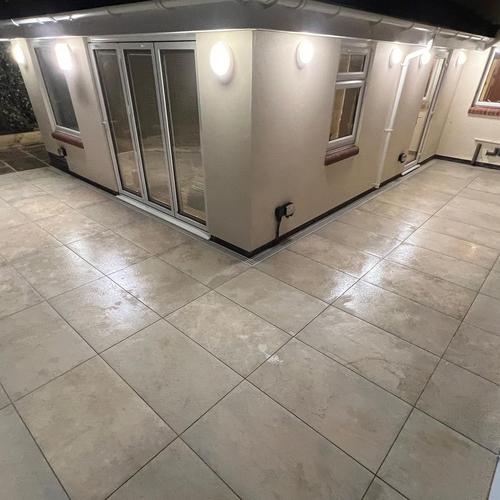
Stone Zone is proud to offer a wide range of porcelain patio slabs, including our best-selling Sienna porcelain paving range in colours such as Quartz Grey, Cappuccino, Ocean Mist, Starlight, Jupiter Grey, Anthracite, Quartz White, Argent and Mocha, alongside a whole host of other porcelain collections to browse and buy for your garden.
Porcelain Paving Disadvantages
Generally more expensive
Compared with other paving options, porcelain tends to sit at the higher end of the price range, so covering a large area can add up. We do offer finance options if you would prefer to spread the cost in instalments.
Hard to cut without professional tools
DIY projects can be tricky purely because of the strength of each slab. Porcelain is extremely difficult to cut without the right equipment and experience, so we highly recommend hiring a professional for any cutting, as it can be dangerous otherwise.
Heavy
Finally, porcelain slabs are heavy and not easy to handle without experience, so it pays to know your materials and have a helping hand before taking on a porcelain project yourself.
Still undecided? Our friendly team is always happy to talk through the options and help you find the perfect paving for your project. Give us a call on 01202 874207 or visit your local Stone Zone showroom to see both materials in person.
